Iterava
TRAIL DESIGN
TRAIL DESIGN
Couldn't load pickup availability
Self-paced learning overview
- 📥 Digital file available after purchase
- 🗂️ Long-term availability
- 🔒 Secure checkout
- 🗓️ Content updated in 2026
1. Problem Statement
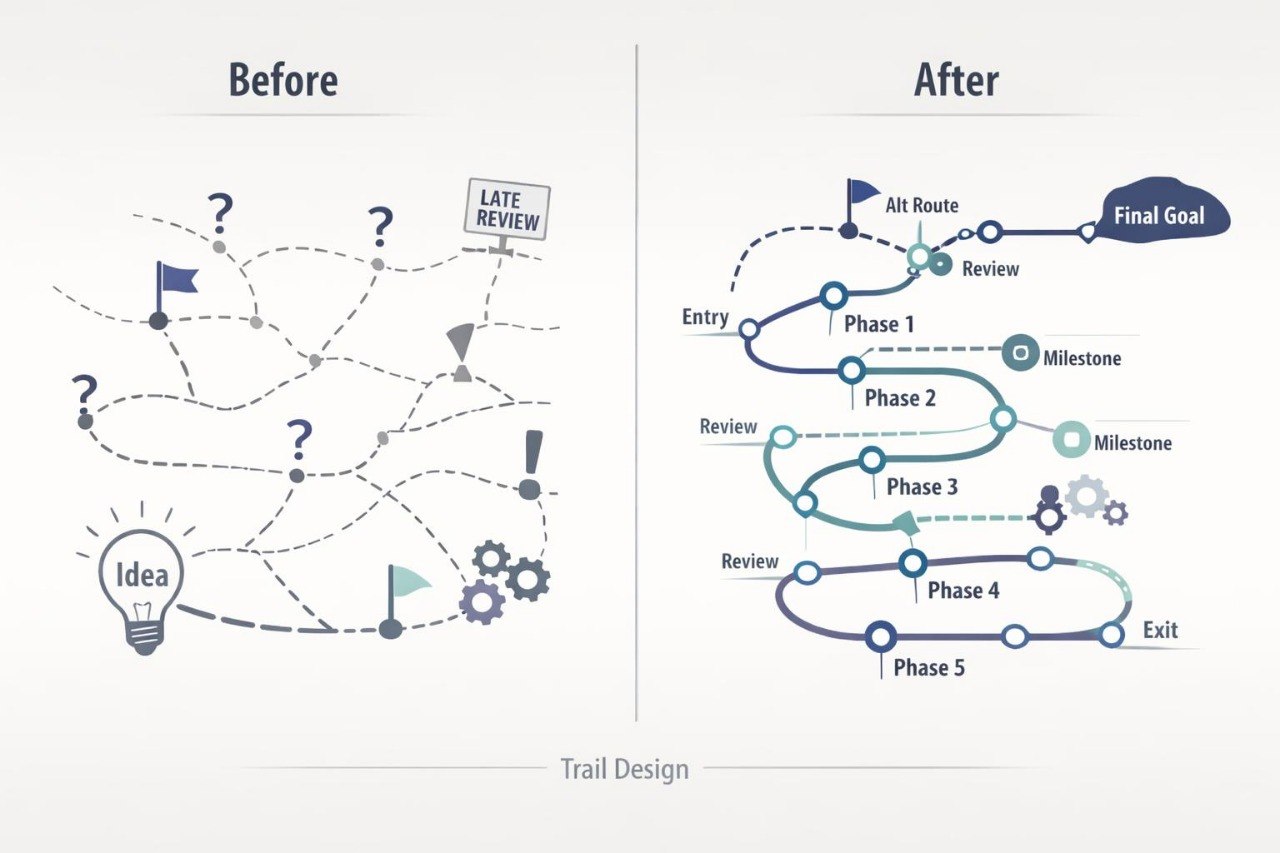
Struggling to build a project route in which every stage has a clear purpose? You are not alone: many digital projects begin with a task list but lack a defined logic for moving from one activity to the next. A team may understand the final goal while remaining uncertain about the intermediate outcomes required along the way. Reviews can then occur at the wrong time, dependencies may be noticed too late, and one change can affect several work areas. Without a carefully designed route, it becomes harder to evaluate project status, explain the next actions, and maintain a shared understanding of the workflow.
2. Solution
This course will teach you how to design a digital project route as a connected system of stages, decisions, and review points. You will learn how to define the beginning and completion of each phase, describe its expected outcome, and establish criteria for moving forward. The course explains how to work with dependencies, alternative scenarios, and adjustments to the initial plan. You will create a visual route map that helps contributors understand the current stage and the actions that follow. Practical assignments allow you to apply this approach to a learning scenario or a workplace project.
3. What’s Inside
Module 1: Project Route Definition
Define the overall direction of the project, its starting point, intended final outcome, and main working boundaries.
Module 2: Stage Architecture
Learn how to divide a project into logical phases and describe the role of each phase within the wider route.
Module 3: Entry and Exit Criteria
Write conditions for starting and completing a stage so contributors know when work can move forward.
Module 4: Milestones and Review Points
Build a set of intermediate outcomes and review moments for examining project movement at selected stages.
Module 5: Dependency Trails
Explore connections between tasks, teams, decisions, and materials required before later activities can begin.
Module 6: Alternative Routes
Prepare alternative scenarios for changes involving dates, requirements, priorities, or team composition.
Module 7: Route Communication
Learn how to explain the project route to different contributors without filling communication with unnecessary details.
Module 8: Trail Design Map
Complete a full route map containing phases, outcomes, dependencies, review points, and alternative actions.
4. Who Is This For?
✅ This course may suit you if you:
- plan digital projects containing several connected phases;
- coordinate work between different contributors;
- want to describe transitions between stages more accurately;
- work with dependencies and intermediate outcomes;
- need to communicate the overall route to a team;
- already understand foundational planning and workflow coordination.
❌ This course may not suit you if you:
- do not yet distinguish between project goals, tasks, and outcomes;
- work only with individual activities that have no connected stages;
- need materials focused only on financial planning;
- do not intend to complete a practical route-building assignment.
5. What You’ll Learn
After completing Trail Design, you will be able to:
- divide a digital project into at least five logical phases;
- define starting and completion conditions for each stage;
- establish four or more review points;
- describe intermediate outcomes for every part of the route;
- map dependencies between teams, decisions, and tasks;
- prepare an alternative scenario for changing dates or requirements;
- write a concise route explanation for project contributors;
- complete a Trail Design map for a learning or workplace scenario.
6. Refund Terms
A refund request for Trail Design may be submitted within 30 calendar days of the purchase date. Requests are reviewed according to the published Iterava policy, enrollment terms, and the amount of course material already studied. Review the module outline and refund conditions before completing enrollment.
7. Certificate
After completing every module and submitting the final route map, the learner receives an Iterava certificate. The document records completion of Trail Design: Digital Project Route Planning.
1. Do I need previous Digital Project Management experience?
1. Do I need previous Digital Project Management experience?
No. Iterava courses are organized step by step, beginning with core concepts and roles before moving into planning, coordination, documentation, and workflow analysis. The depth of the materials gradually increases with each plan.
2. How are the courses organized?
2. How are the courses organized?
Each course contains thematic modules, written explanations, working examples, diagrams, review questions, and practical assignments. You can study the materials at your own pace and return to earlier topics while completing the exercises.
3. How long does a course take?
3. How long does a course take?
The study time depends on the number of modules, the complexity of the assignments, and your personal learning rhythm. Each plan contains a different amount of material, so advanced plans require additional time for careful study.
4. Is a certificate included?
4. Is a certificate included?
Yes. After completing every module and the final assignment, the learner receives an Iterava certificate. It includes the course name and confirms completion of the learning program.
Share